
EEAT Overview
E-E-A-T has become an important part of SEO, helping Google and other platforms evaluate the quality of pages in search results. However, unless you’re an SEO-er, you’re probably not aware of what it is.
With search engines morphing and the rampant rise of the AI overview, the question lingers? Does it still matter? The answer… a resounding yes!
What is E-E-A-T?
E-E-A-T stands for Experience, Expertise, Authoritativeness, and Trust. It’s the guidelines used by Google to help evaluate the usefulness and helpfulness of content to users. This means making sure you are creating content that is useful to the user, not solely for ranking purposes.
E-E-A-T remains a key indexing factor as SERPs and AI Overviews come to the fore. Not only that, but content that shows experience, expertise, authority and trust improves users‘ experience, helping people to make more informed choices along the way.
Why is E-E-A-T important?
Often, E-E-A-T has been considered especially important for YMYL (‘Your Money, Your Life’) sites. These are websites where the content could potentially impact the money, well-being, health, and safety of a user. An example of these sites is those providing financial, health, legal or news information.
However, E-E-A-T is still important for non-YMYL sites too. Key indicators of E-E-A-T can help your site appear more trustworthy and legitimate to users, increasing the likelihood of them making a purchase or completing a desired action on your website.
Let’s break down further each element of E-E-A-T and some examples of how you can demonstrate this on your site.
Experience
Previously, the acronym was E-A-T; however, in 2022, Google added Experience. This reflects the growing importance of demonstrating real-world, first-hand insights from actual people, particularly as AI-generated content becomes more common.
To demonstrate Experience:
- Reference personal experiences – When writing a blog, is there a personal anecdote you can add to help explain and verify the information provided? Alternatively, adding an Our Story page where you explain the history of the brand, how it came to be, alongside your values, all showcase who you and your brand is.
- Showcase case studies – Case studies allow you to share real examples of work you’ve done, problems you’ve solved, or results you’ve achieved. This not only validates your expertise but also proves that you have hands-on experience in your field.
- Customer testimonials – Real accounts from customers explaining how they’ve used your product or service in their own lives.
- Social proof in numbers – Highlight metrics, such as the number of clients served, years in business, or key projects completed, to show a proven track record.
- Tutorial content – Show your experience in action by creating how-to videos, product walkthroughs, or live demonstrations that help your audience solve real problems.
Example:
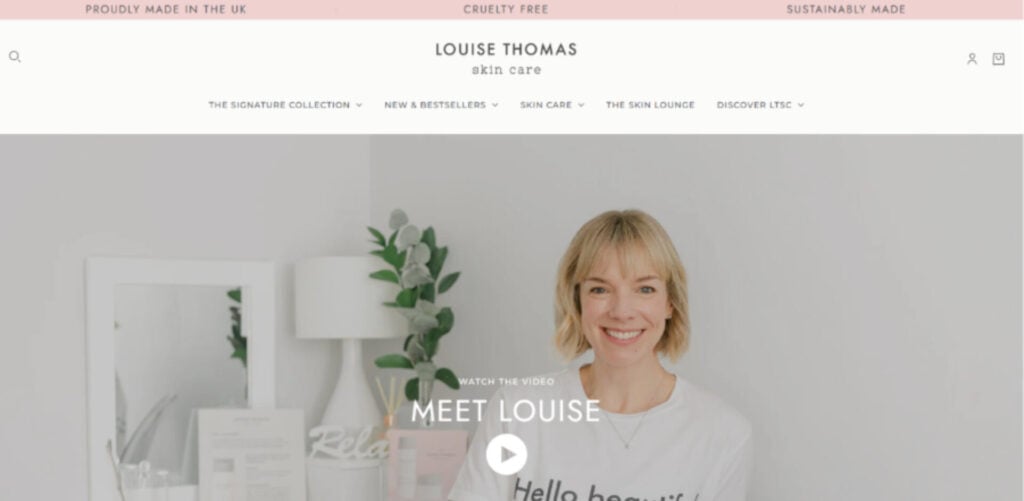
Our client, land&water’s, Our Story page really helps users get a sense of who the brand is and what makes land&water unique. Similarly, Louise Thomas Skin Care has a Meet Louise page, which allows people to put a face to the brand and better understand the values and experience Louise has.
Expertise
This shows your knowledge of your field. It’s important to demonstrate why the content you produce is valid and should be listened to. You do this by explaining what expertise you have.
- Adding author biographies – Ensure your blog articles link back to an author biography that provides a summary of who the author is. You can list credentials and accolades gained, as well as your years of experience working within your industry.
- Creating thought leadership content – Share unique insights, original research, or analysis within your field. Thought leadership shows that you don’t just understand your industry, but you’re contributing to it.
- Collaborate with professionals – In fields like health, finance, or law, working with experts or licensed professionals to review or co-author content will add credibility. It also amps up your ability to distribute.
- Maintain consistency and accuracy – Expertise isn’t just shown once, it’s reinforced through regularly updated, well-written, and error-free content that reflects your current knowledge of your industry.
Example:
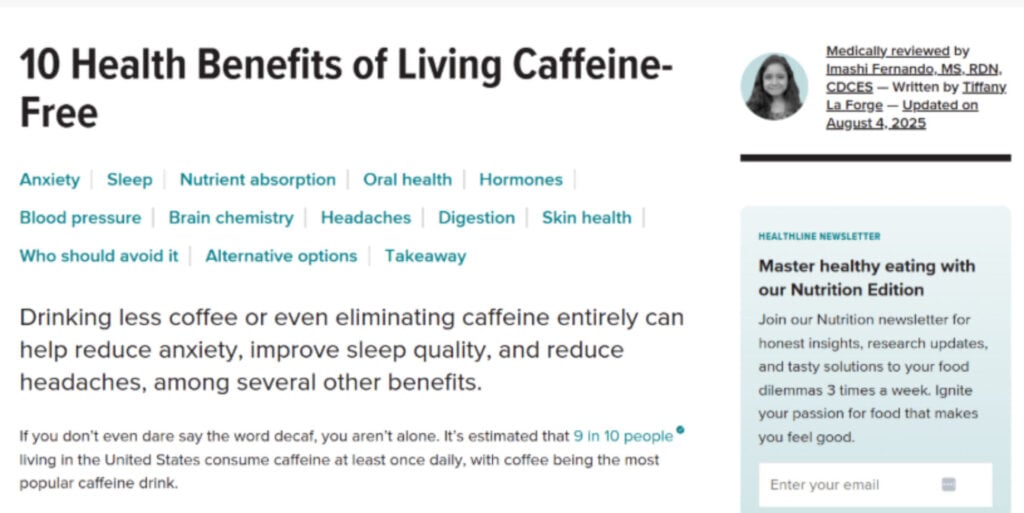
Healthline is a great example of a site that showcases E-E-A-T well in their articles. As soon as I land on an article, I can see in the top right corner who wrote the article and that it has been medically reviewed – with links to their author pages.
I can also see that they link to stats they reference within the article, as well as being well structured with descriptive headings, making it easy for a user to read and understand the content.
Authoritativeness
Like Expertise, authoritativeness is how much influence you have in your field. Users are more likely to believe a website that is prominent within your chosen space across the web.
- Backlinks from reputable publications – When other trustworthy websites link to or mention your content, it signals that your site is a reliable reference. Focus on earning mentions in respected publications or industry blog sites. This is increasingly key given the changes to how AI Chat and AI overviews document and understand your brand, which gives way to mentions.
- A consistent brand profile – Having cohesive, active digital profiles across platforms like LinkedIn, Instagram, and relevant social channels helps establish authority and recognisability whilst also being discoverable across search platforms. They also act as proof points for people looking to make a decision, offering a ‘sign of life’.
- Highlight awards and accreditations – Display any certifications, industry memberships, or awards prominently on your site to strengthen perceived authority.
- Feature in the media or industry publications – Press coverage, interviews, or guest contributions in recognised outlets show that your expertise is sought after beyond your own site. Again, they help things like Google understand your brand in different ways, building up a picture of what you do well. This contributes to how you might be mentioned beyond traditional search engines.
Example:
On our client, land&water’s homepage, they showcase some of the popular publications they have featured in:

Trust
Lastly, does a user believe the information you have provided? Do they trust that you will produce accurate and reliable content? If your site appears untrustworthy, users won’t feel confident in making a purchase or taking an action on your site, so it’s important to demonstrate trust signals. Such as:
- Adding reviews – Showcasing customer testimonials and reviews of your services and products is a great way to demonstrate first-hand experiences users have had with your brand. This could be reviews you’ve gathered from customers yourself or integrated reviews from Google, Trustpilot, or other review sites. Even showing ‘bad’ reviews isn’t always bad – it actually helps add to the legitimacy of your site.
- Showcase user-generated content – Encourage customers to share photos, videos, or stories of their experiences with your brand. This acts as social proof.
- Ensure site security and clarity – Implement HTTPS, include visible privacy policies, and make sure your terms, returns policy, and product information are easy to find and understand.
- Be transparent about your business – Include clear contact details, team pages, “About” sections, and real business information. Users should easily see who’s behind the brand.
- Provide reliable customer support – Offer visible support channels (live chat, email, or phone) and respond to reviews or queries. Quick, professional responses build trust.
Example:
On Glossier’s product pages, it shows information about the reviewer – helping other customers determine whether this product will be right for their skin too:

E-E-A-T in the age of AI
As AI tools continue to evolve, the way we create and evaluate content is changing, but the principles of E-E-A-T remain essential. In fact, they’re becoming even more important.
Whilst AI can help assist with content creation and structure, what will set it apart is human experience and authenticity. Google has made it clear that it values content created “for people, by people,” especially when it reflects first-hand experience and genuine expertise. This applies to other ways of finding information beyond a traditional search engine experience. If anything, commitment to E-E-A-T will help qualify the people finding you better than ever before.
The key is to use AI to enhance the way you approach, not replace your insight or unique experience, and use markers of E-E-AT to add credibility and trust to your content.
Conclusion
E-E-A-T is a framework for creating content that genuinely helps users, builds credibility, and encourages confidence in your brand.
To help evaluate whether your content meets the standards of E-E-A-T, Google has provided questions to ask yourself when determining the quality of your site’s content and assessing what needs improving.
In today’s competitive AI-dominated digital landscape, E-E-A-T is your guide to standing out. By prioritising authenticity, credibility, and user-focused content, you can create pages that both users and searchable platforms trust.

















![[removal.ai]_60636a21-0918-4e97-8dff-085e9821386e](https://yawnmarketing.co.uk/wp-content/uploads/2023/01/removal.ai_60636a21-0918-4e97-8dff-085e9821386e.png)
![[removal.ai]_258a25d0-cf81-49e2-97ea-eb5dba513e42](https://yawnmarketing.co.uk/wp-content/uploads/2023/01/removal.ai_258a25d0-cf81-49e2-97ea-eb5dba513e42.png)